
Trace a Fayette County Ownership Chain
Tracing who owns a property in Fayette County means walking the deed chain backward. Take it one transfer at a time. Start with the current assessor name or the latest deed. Then read the legal description. Then hunt that prior grantor as a grantee in an earlier record. The online index has a known start point. Books, probate files, surveys, and archives carry the chain deeper into Fayette County property records. Street addresses change. The deed's land description is the true link between one transfer and the next.
| Transfer date | Grantor → Grantee | Deed type | Book/Page |
|---|---|---|---|
| Latest recorded transfer | Read named parties on deed image | Read exact instrument label | Copy displayed reference |
| One step earlier | Prior grantee → current grantor | Compare deed description | Record the older book/page |
| Historic-book step | Use alphabetic index to locate parties | Check book category | Copy the historic image key |
The county's online deed index reaches back to 1981. Web images, per the image guide, start in mid-1989. Earlier transfers live in the historic indexes and deed books. The Clerk's guide describes deed and mortgage indexes spanning 1794-1903, plus several older book runs. The Fayette County Clerk stays the custodian of land records through the whole chain; a library or microfilm reference adds context but never replaces the deed itself.
Fayette County Former Owners in the FayetteDeeds Chain
Search the known grantee, then open the recorded image. That document's grantor is your next name. Search it as a grantee, and repeat. Fayette County's index offers a specified-party mode, a one-name mode covering both roles, and a two-name or common-instrument mode. When a common name floods the results, narrow it with the legal description, subdivision, lot, block, date, or instrument type.
- Find the newest deed and confirm its grantee and legal description.
- Read the grantor and search that name as a grantee in the prior period.
- Compare the old description, lot, block, or survey reference with the same land.
- Track each instrument’s date and book/page before moving to the next transfer.
- When the online index ends, switch to the historic book and archive routes.
- Grantor
- The party transferring an interest in the instrument.
- Grantee
- The party receiving the interest.
- Chain of title
- The ordered sequence of recorded transfers for the land.
- Legal description
- The written land reference that can persist when a street address changes.
Fayette County Former Owners and Index Cutoffs
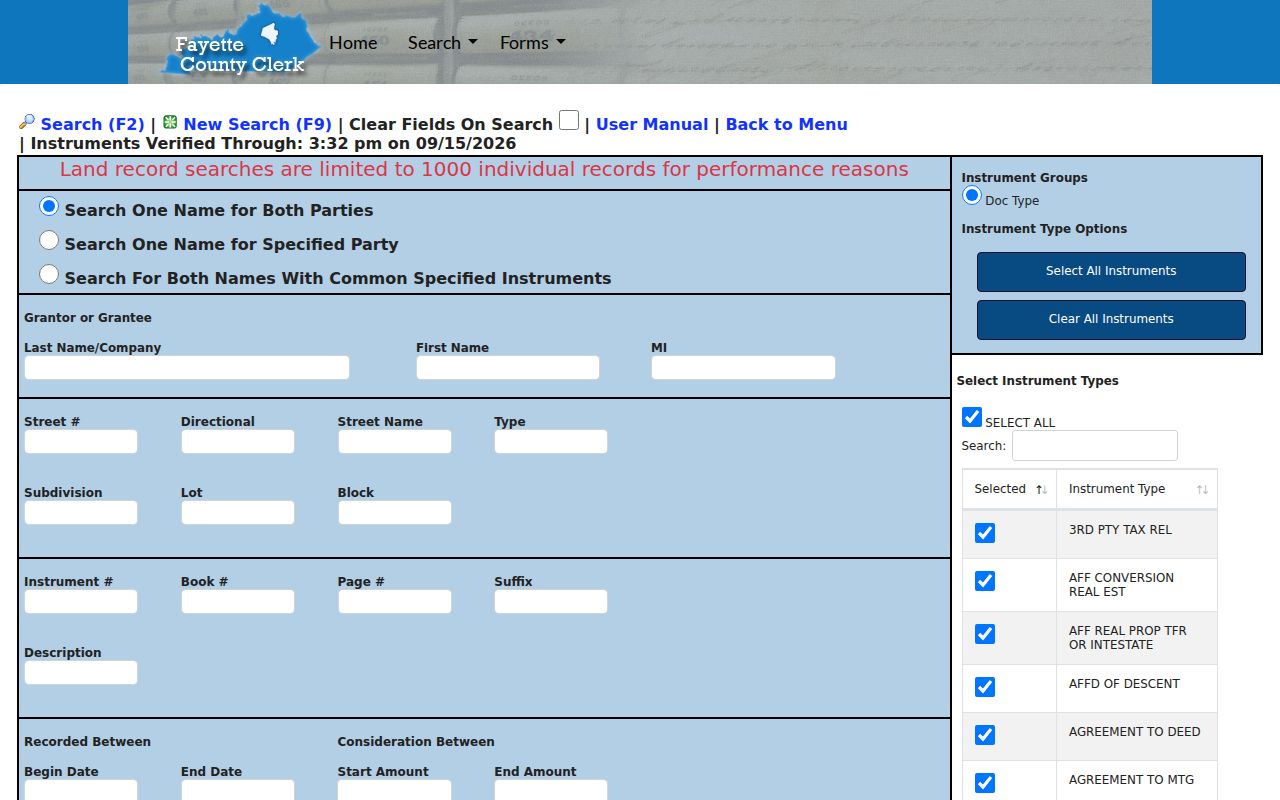
One cutoff deserves attention. The Fayette County online deed index is advertised from 1981 to the present. But the user guide describes image access only from mid-1989 forward. An index entry can therefore point to a deed. Its image may not display through the same web route. Searches are also capped at 1,000 individual records. The page shows an "Instruments Verified Through" date and time, so broad name searches work best with a date or instrument filter.
When an early transaction falls outside the digital index, results alone are not the chain. Use the non-indexed-document route, then move to the alphabetic deed and mortgage indexes. Record the book, page, and exact legal-description wording. A later search then follows the same Fayette County land. It does not just follow the same family name.
Historic Deed Books for Fayette County Former Owners
The County Clerk's inventory is deep. It includes 1794-1903 deed and mortgage indexes, plus deed books A-Z from the late 1700s through September 1825, and books 1-159 beginning in October 1825. Later runs stretch through the twentieth century: books 229-980 from 1925 to 1970. Partial books 981-1392 pick up from 1970 to 1986. Other historic holdings include surveys, land treasury warrants, partition lands, property-tax records from 1807-1808, wills, and guardianship books.
Older images rely on six-character book names and page suffixes for duplicated page labels. Follow the official guide's exact key. Do not normalize it to a modern volume format. The guide even notes that Fayette County has no Minute Book 5. It is missing from the old city-minute series. Quirks like these explain why a search will not always follow a neat number sequence.

Fayette County’s 1893 Fire and Gaps
A later Fayette County courthouse burned in 1893. The West Virginia Archives and History account gives that date. That does not mean everything was lost. Some marriages survive from the county's formation in 1831. The Clerk's guide lists old deed books, surveys, wills, and separate burnt-record volumes. Birth and death records have significant pre-1866 gaps. But those gaps say nothing definitive about the land-record series.
When a chain stalls at an early gap, turn to other leads. Search probate, tax books, surveys, and newspaper notices. A missing indexed name may just reflect a different spelling or a changed land description. It is not proof that the prior owner never held the land. Keep the uncertainty in the timeline, and note which record supports each Fayette County transfer.
Fayette County Estate Transfers and Former Owners
A death can create several steps in one ownership chain. Fayette County's County Clerk holds wills, fiduciary documents, and probate records. The office also keeps affidavits of descent and executor or administrator deeds. A will may name an heir. A later deed records the actual transfer. Search the estate or fiduciary name. Check the instrument type rather than expecting a single death record to name the new owner of record.
The historic guide describes will books from 1793 through 1935. It also lists probate records from 1793 to current and guardianship books from 1817 to 1902. A death certificate comes through West Virginia Vital Registration. It stays distinct from the estate file. For an old family farm or tract, compare the probate description against later deed language and survey references.
Fayette County Archive Leads for Former Owners
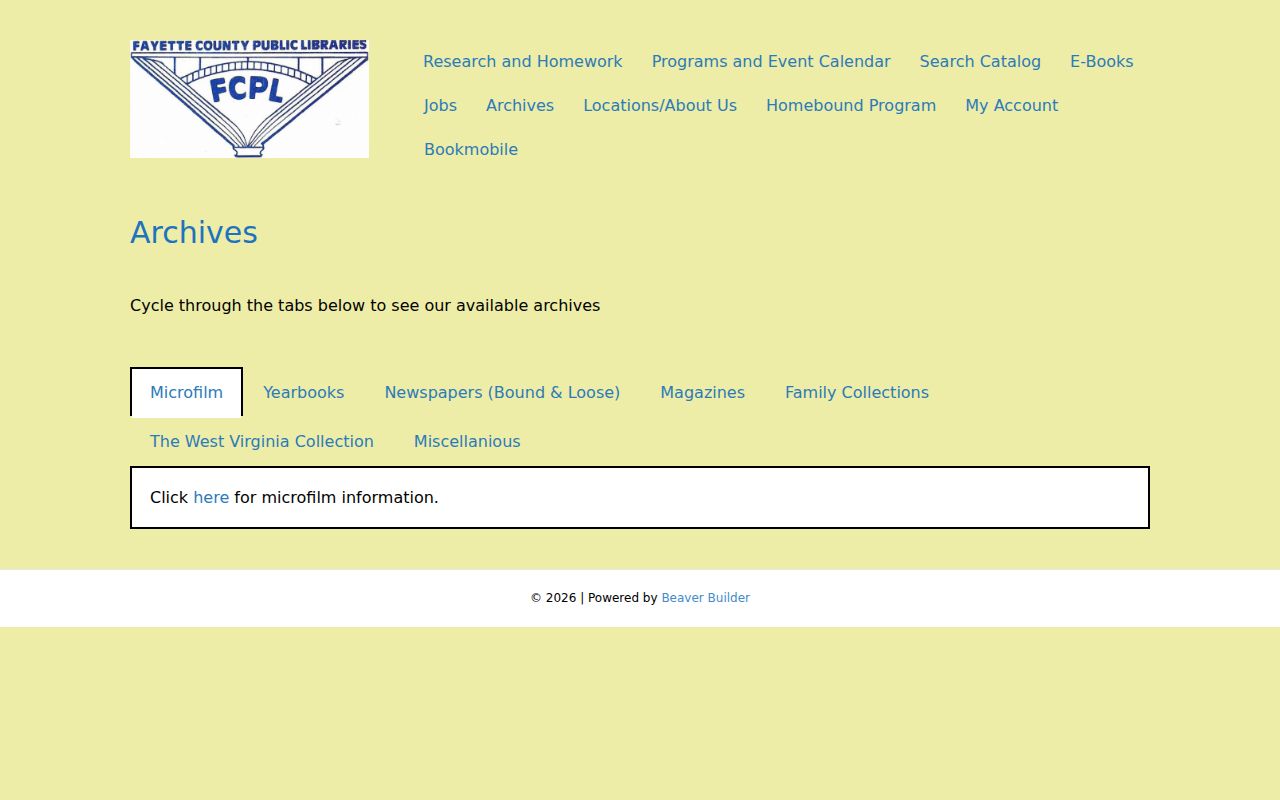
Two archives open windows that a modern Fayette County property records index cannot. The Fayetteville Public Library keeps directories and newspapers. It also holds cemetery books, family histories, yearbooks, town photographs, and coal-mining materials. WVU's Regional History Center holds Fayette court and miscellaneous papers. These include land deeds, grants, surveys, plats, taxation records, election material, and town minutes. Together they can supply a historic name or street context. That helps when the current owner of record trail goes quiet.
Directories need careful handling, though. They list occupants and businesses, not necessarily the owner of record. Note the edition and the exact address. Then test the name against census or newspaper context before trusting it. After that, return to the County Clerk's legal description to anchor the parcel properly. The library's Fayette Tribune and Montgomery Herald runs have gaps. So pick dates that match the event rather than assuming every year survives.
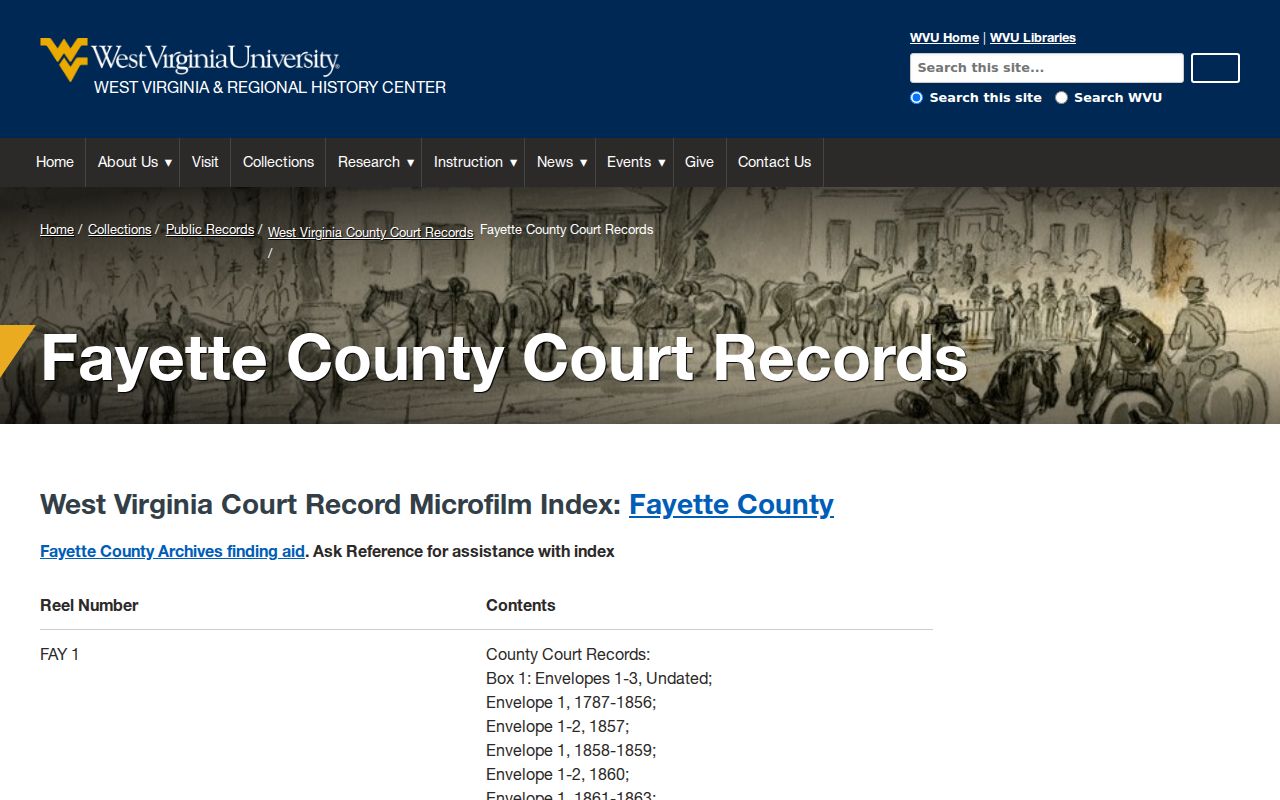
The Fayette County Public Library archive describes its newspaper, directory, cemetery, and genealogy holdings, useful context for any Fayette County property search into past owners.
How Far Back Fayette County Ownership Records Go
Fayette County's web index covers only one layer of the ownership record. The archive guide reaches back to the late 1700s for deed books. It also names old surveys and land warrants. The courthouse fire did real damage. Surviving deed books and reconstructed records still offer ways around some of the gaps. So treat every chain endpoint as the end of a searched source. It is not the true beginning of ownership.
A public chain table cannot settle a question of title by itself. For a legal conclusion, bring in a title professional. That professional can examine the actual instruments and resolve interests a casual deed records search will miss.
Lawful use. Research prior owners for house history, estate work, and property diligence. Do not use names or addresses to stalk, threaten, or harass a living person.