
Fayette County Property Value Types
A Fayette County parcel record can carry both appraisal components and a sale reference. But the two should never be blended. West Virginia law sets the assessment level at 60% of true and actual value. That ratio is a statutory framework, not a formula. Dividing an assessed number by 0.60 will not reliably reproduce a current sale price. Assessment year, property class, exemptions, and transaction details all shape what each figure means. They matter in practice.
| Value | What It Is | Where |
|---|---|---|
| Assessed/appraised value | Tax appraisal assigned to the parcel, with land and improvement parts | WV IAS / Assessor |
| Market value | A current sale estimate for a defined valuation purpose | Licensed appraisal or market analysis |
| Last sale consideration | Amount stated for a recorded transaction | Deed record and assessor sale field |
| Taxable amount | Assessment after a qualifying reduction | Assessor exemption record |
The Assessor's Fayette County property value belongs to the tax system. It is not an offer price. A deed's consideration is a reported transaction amount. It may be nominal, exempt, or simply old. A taxable base can fall below the assessed amount too, whenever a qualifying exemption applies. When comparing parcels, keep all three fields separate along with their dates and source labels.
Fayette County Assessed Value at West Virginia’s 60% Level
W. Va. Code §11-3-1(d), as summarized in the state assessment-ratio study, directs the Tax Commissioner to monitor whether assessors meet the 60% of true and actual value standard. The study compares assessor appraisals against sales prices. It measures the quality of assessment ratios statewide. That check concerns assessment levels, not any single parcel. It is not a market appraisal and no promise that every account tracks a recent sale.
Fayette County's real property falls into classes II, III, and IV under W. Va. Code §11-8-5. Surface parcels, attached buildings owned together with land, and most mineral real-property interests can all sit inside this framework. Read the class and legal description first. In a coalfield county, comparing a surface parcel against a mineral interest or a different land-use category without that step invites bad conclusions.
Look Up a Fayette County Parcel Value
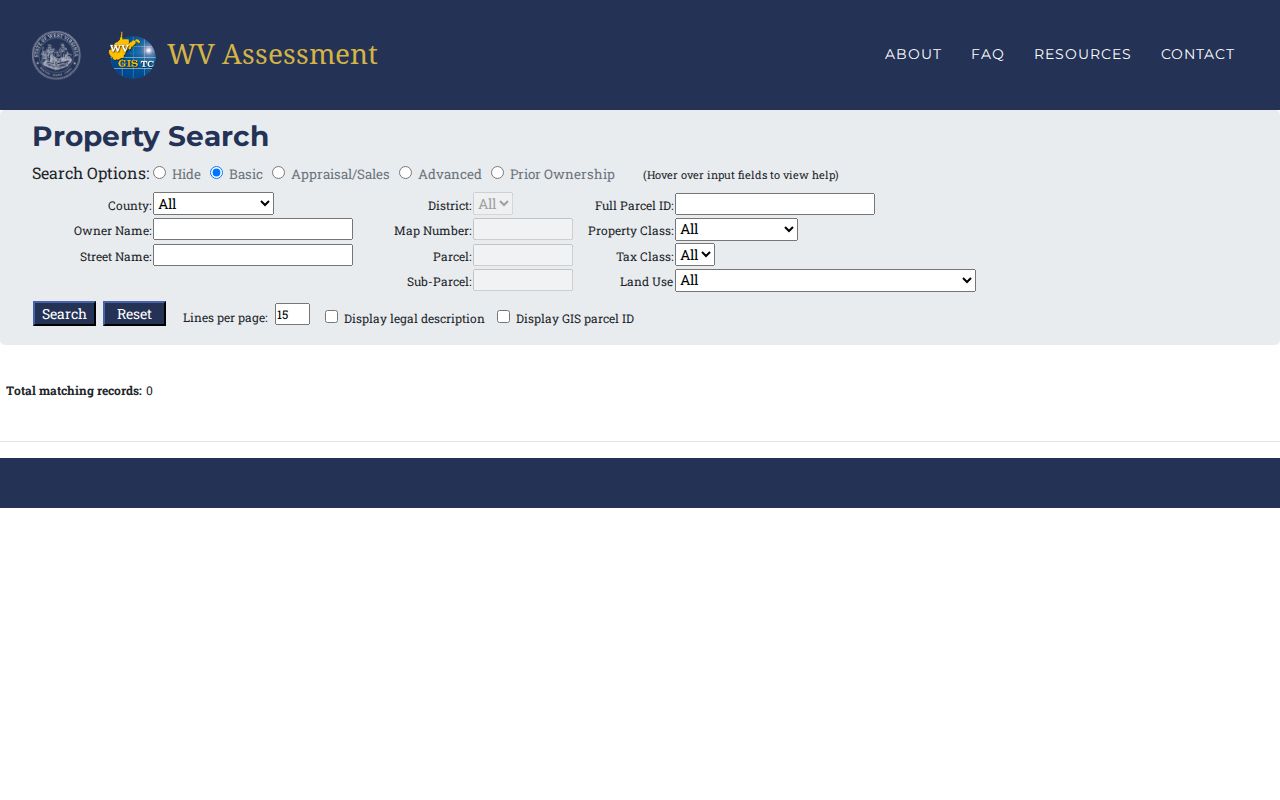
Search WV IAS by address, owner, or parcel key. Then open the Fayette County assessment record. The parcel card lists the land appraisal, building or improvement appraisal, and total appraisal. Acreage, class, land use, sale date, and sale price appear when available. Deed book and page and the legal description appear when available too. Save the GIS ID if the parcel has a mapped reference. Every value depends on its account and assessment context. Hold off comparing two parcels until you understand their class and land-to-improvement mix.
- Search the address or known parcel ID in WV IAS.
- Record the land, improvement, and total appraisal fields with the parcel class and acreage.
- Note the sale date, price, and deed book/page separately from the appraisal.
- Compare the same fields across similar parcels, and confirm the assessment year with the office if unclear.
- Assessed value
- The county value used in the assessment process.
- Market value
- A price estimate for a particular valuation date and purpose.
- Assessment level
- The statutory ratio used to review assessor practices statewide.
- Consideration
- The amount stated in a recorded transfer, not necessarily market value.
Fayette County Land and Building Values
WV IAS splits the land appraisal from the building or improvement appraisal. It then reports a total. That split matters. Two Fayette County parcels can have similar totals. But they may represent very different land area, structures, or classes. The record may also show calculated and deeded acres. It can list building year, building area, and primary or secondary structures. Remember these are assessor fields. They are not a full inspection report or a private appraisal.
Use the land and improvement parts to compare like with like. A large rural tract, a small-town residence, a commercial lot, and a mineral interest do not share an assessment context. If a value looks surprising, confirm the property class, acreage, legal description, and assessment year before drawing any conclusion.
Fayette County Sale Consideration
The assessor's sale-date and sale-price fields point toward a transaction. FayetteDeeds holds the recorded instrument and its stated terms. Consideration is not automatically current market value. It may be nominal. It may reflect a family transfer, cover a different interest, or predate the current assessment by years. Check the deed date, grantor, grantee, property description, and parcel ID. Treat it as a value clue only then.
A recorded sale is one event. An appraisal estimates value for a defined date and purpose. Keep those labels separate in any comparison table or notes. A legal description earns its keep in Fayette County. The deed address and the current parcel situs do not always line up exactly.
Fayette County Exemptions and Taxable Value
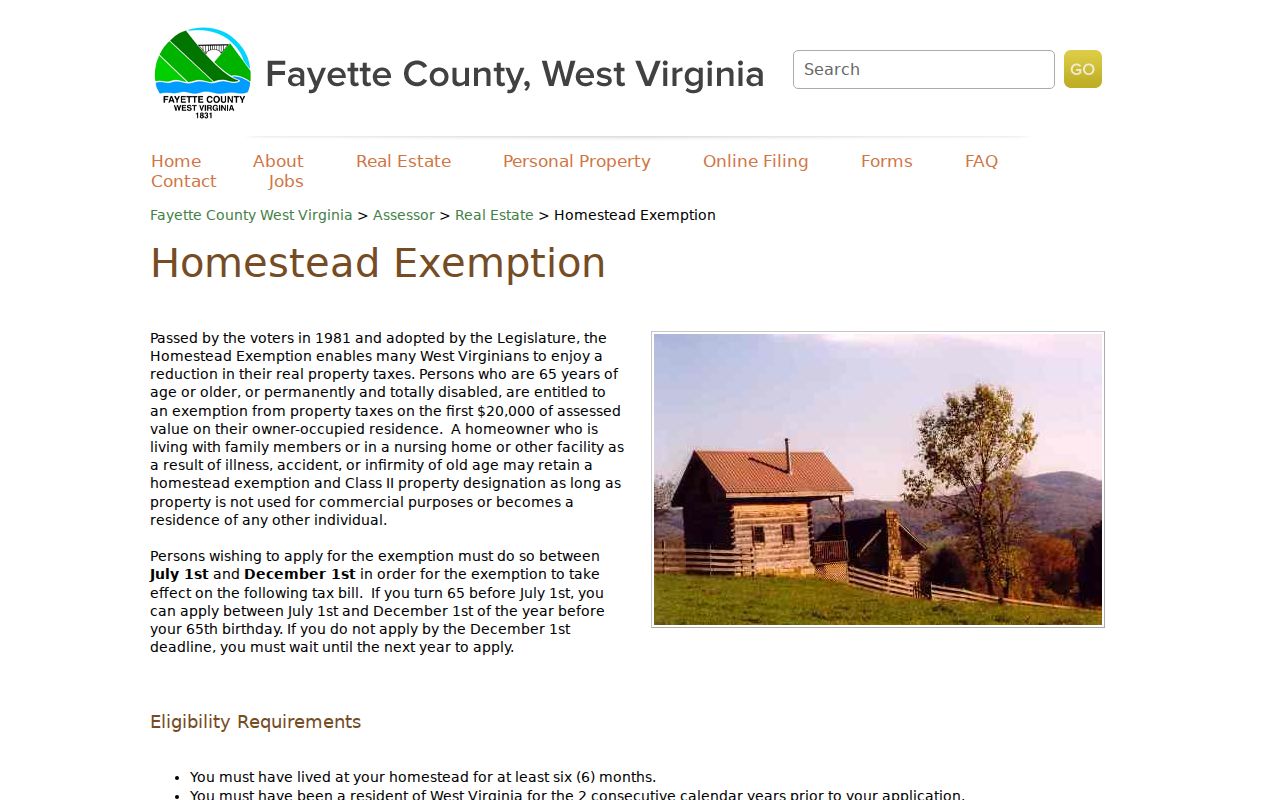
A taxable amount can drop below the assessor's appraised figure when a qualifying program applies. Fayette County's homestead exemption removes the first $20,000 of assessed value for eligible owner-occupied homes. The application carries age or disability, residency, occupancy, and deed-name requirements. So an exemption flag is not a general discount. Nor is it a fresh estimate of sale value.
The key here is distinguishing the total appraisal from the taxable base after any exemption. The Sheriff's Tax Office then runs the tax bill process on the account. Program rules and application timing appear on the county tax-record page.
Fayette County Equalization Context
The state equalization study works on a three-year cycle. It samples roughly one-third of real-property parcels each year. That makes it a statewide oversight tool. It is not a parcel-level value history for Fayette County. The county publishes no fixed revaluation cycle. It also offers no official countywide time series that would show how often an individual account changes.
To track value over time, use the assessment year. Pair it with the land, improvement, and total fields the portal supplies. Then set a recorded sale beside the appraisal without treating the two as equivalent. An older figure may reflect a different class, exemption, property condition, or date.
What a Fayette County Assessor Value Is Not
A Fayette County assessor value is a mass-appraisal figure built for tax purposes. It is not a price guarantee. It is not a lender's valuation either, nor an individual appraisal for a sale. The assessor's record, the deed consideration, and the taxable base each describe a different part of a property's value history. The assessor's record tracks the official value. The deed consideration shows what a buyer paid. The taxable base reflects the portion subject to tax. A licensed appraiser estimates market value for a defined purpose. A tax appeal runs through its own separate process.
Value vs price. An assessed amount does not predict a sale price. For a transaction decision, obtain an appraisal suited to the property and purpose.